
Without realizing it, we adopt positions and customs that interfere with our well-being. Correcting them will not only avoid back problems, but health problems in general.

Curve your back when walking, always place your weight on one side, sit in any way… They are habits that configure a bad posture that, sustained over time, can alter our quality of life.
The direct consequences of poor body hygiene range from neck, shoulder and back pain, migraine or shoulder impingement to more severe pathologies such as herniated discs or spinal deviations.
It is vitally important to maintain good posture, not only during the workday or when sleeping, but also while performing daily activities such as walking, cooking or practicing physical activities.
A good posture improves our quality of life, because it avoids back, joint and muscle problems, instills self-esteem and stylizes our figure.
Here are some keys so you know how to improve it:
- Constant attention. Putting awareness in the posture is the first step to correct it. The key is to keep your back upright, your head in front, and your abdomen inward, whether standing, walking, or sitting.
- Physical activity. Physical exercise is essential to improve posture and strengthen all those muscles that, over time, have been weakening. Exercise at least three times a week and you will notice how your posture stands up and increases your sense of well-being.
- At work. If you spend many hours in front of the computer, take small breaks during the day and walk to loosen your muscles, do not cross your legs and always keep your feet in contact with the ground. Use a good ergonomic chair with adjustable backrest.
- Comfortable shoes. The use of heels can affect balance and alter the way we walk, so it is important to choose footwear that gives us stability to avoid future back pain.
- Healthy weight. The extra weight can weaken or overload the muscles (abdominals, pelvis and spine) and affect posture. Maintain a balanced diet and control your weight to promote posture.
EXERCISES TO IMPROVE POSTURE
The sequence of exercises that I propose is designed to help you become aware of your posture, make your spine more flexible, relieve tension and correct the bad habits you may have acquired over time.
Practice it once or twice a week, alternating it with a good exercise routine to strengthen the muscles of the back and abdomen.
Put awareness in each exercise and observe the improvements after each practice to integrate them into your day to day.
1. STRETCHES THE WHOLE BODY
Rest your body against a vertical surface (a wall or a tree, for example), making sure your spine is as straight as possible.
Open your arms in a cross. Slide your arms up until they are parallel while inhaling.
Prevent your body from separating from the wall. To do this you will need to keep the core firm and pay close attention while executing the movement.
Exhale by lowering your arms slowly. Repeat six to eight times.
Continue to place your heels on the wall. Raise and lower your hips as much as you can without your body separating. Repeat six times.
2. RELAX YOUR LOWER BACK
Kneel down keeping your spine upright and put your hands on your waist. Look ahead.
Inhale by bringing your pelvis back in a gentle motion, ensuring that shoulders, hips and knees are aligned.
Exhale by moving the pelvis forward (retroversion) and activating the abdomen.
Feel the stretch of your lower back at the same time that you release tension throughout the lower back. Perform this movement about 8-10 times.
Next, rest in the child’s position (sit on your heels and rest your head on the floor). Repeat twice.
3. SOFTENS THE SHOULDER BLADES
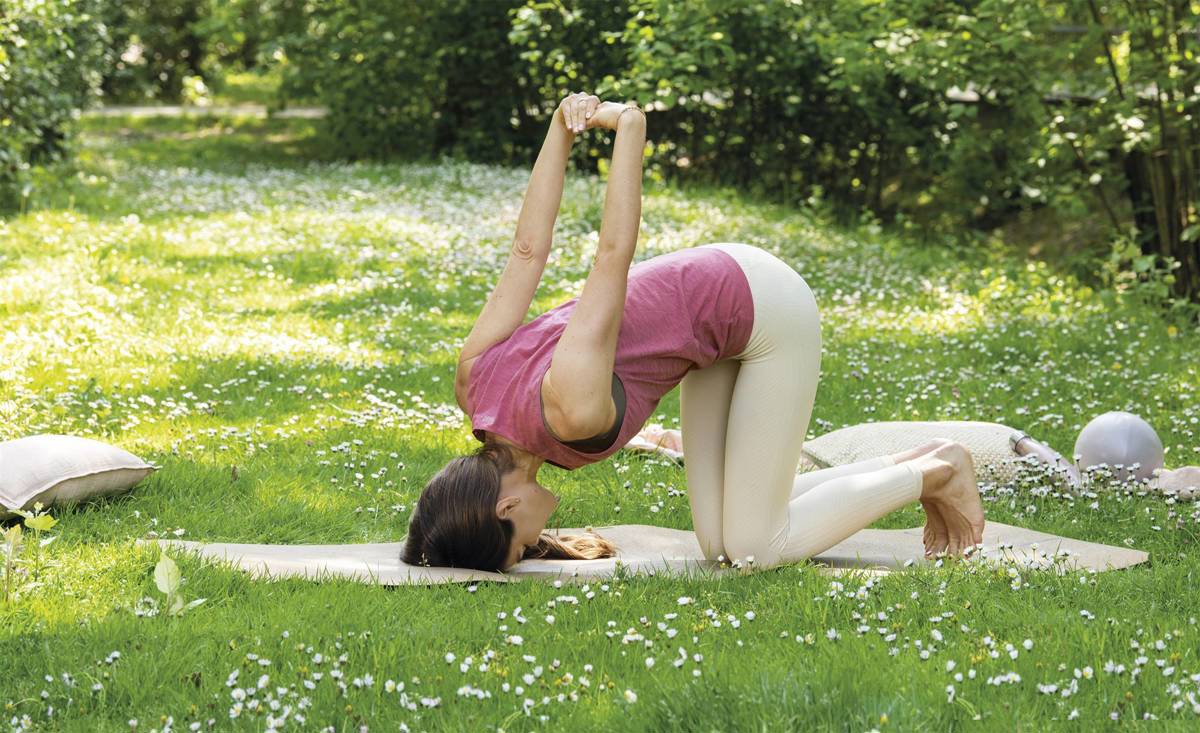
Keep your knees in the same position as the previous pose and interlace your fingers behind your back. Stretch your elbows well and lengthen your neck releasing the tension, in one inhalation.
Exhale slowly as you tilt the trunk forward until it touches the ground with your forehead. If you don’t arrive, you have the option of using a rolled-up cushion or blanket to support you.
Breathe five or six times deeply, softening stiffness in the neck, shoulders and shoulder blades.
It favors postural correction with this exercise that is a balm for the entire musculature of the upper back.
4. STRENGTHENS YOUR BACK
Lie on your stomach with your legs straight out and your arms extended forward.
The forehead should rest on the ground. Exhale and lift your head, legs, arms, and upper torso off the ground.
Feel the weight of your body supported by your lower ribs, pelvis, and abdomen.
Maintain the posture six breaths activating the buttocks, opening the chest in each one and resisting the push of the arms.
Undo on an exhale.
5. REVITALIZES THE SPINE
Lie on your back with your legs straight and your arms relaxed on the sides of the trunk.
Lengthen the neck and slightly bring the chin up.
Bring your right knee closer to your chest by holding it with both hands while you inhale.
You can also flex the opposite leg to increase the stability of the pelvis.
Hold the posture for about six breaths and change legs. Repeat the exercise holding both legs at the same time to finish.
6. RELEASE TENSION
Roll up a blanket and lie on it on your back. Try to get it under the shoulder blades.
Let your head rest on the floor while maintaining a comfortable posture. To do this, you may need to adjust the blanket or rest it on a cushion.
Open your arms in a cross and relax your shoulders that rest on the floor. Softens your lumbar curvature.
Hold the 8-10 deep breath position by noticing the expansion of your chest when inhaling. Exhale and release the accumulated tension.