
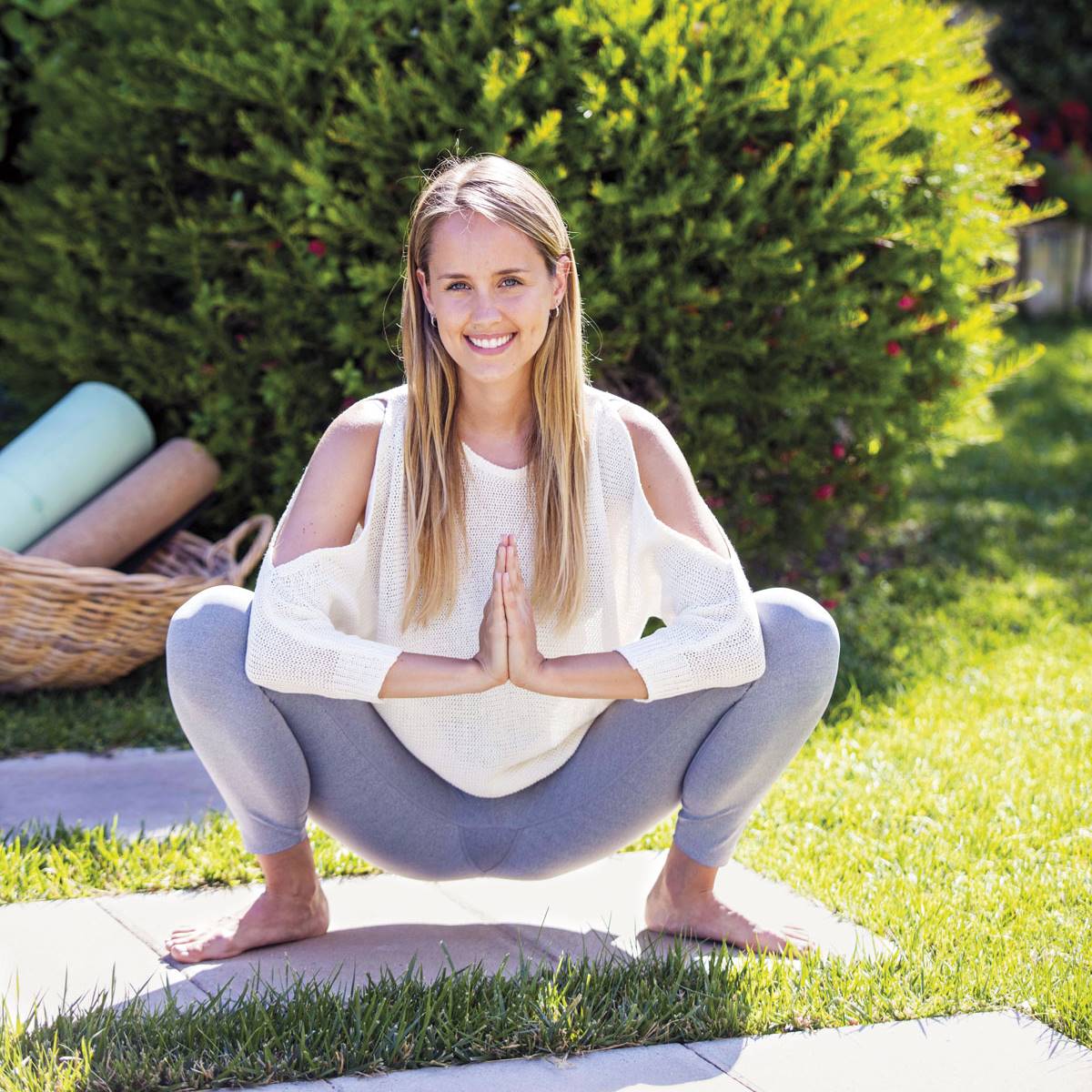
Training in the squatting posture is ideal to promote relaxation and combat stress. It also stretches the back and activates the intestines.

One of the great postures to relax the nervous system, if not the most complete, is the squatting posture. When our nervous system is very activated, squatting is ideal to regulate it, because we stretch the back and above all activate the parasympathetic system, which slows down the nervous system and induces relaxation. It is also a great exercise to improve posture and prevent muscle aches such as back pain.
According to osteopath Quim Vicent, trained in post urology and neuropsychoimmunology, squatting is innate in humans, as is bipedal walking. It is very common in the East to see people of all ages adopting this position on the street in the most diverse activities: cooking, chatting, eating, playing … Most do it with their heels firmly on the floor and their buttocks almost touching the same.
In the West we only see children squatting. However, as we grow up, we stop practicing this innate way of getting high and then when we try to do it, it costs us too much.
Recovering this practice, says Quim Vicent, can be a great way to add another tool to our strategies to improve relaxation and combat stress so common today. Training us to squat comfortably again will also bring us many other benefits.
WHY SQUATTING HELPS COPE WITH STRESS
Squatting has a relaxing effect on the nervous system, so it is a good exercise to practice when we are under a lot of stress or feel nervous.
The anti-stress effect, argues osteopath Quim Vicent, is mainly due to the fact that it increases volemia, that is, the tension of the vessel wall, which activates the baroreceptor reflex; This, in turn, informs the nucleus of the solitary tract (the center of emotions) and activates our parasympathetic system.
This is crucial, because activating the parasympathetic system generates a state of rest that allows us to save or recover energy, causing a relaxation of the body.
Pathologies such as fibromyalgia, chronic fatigue or irritable bowel, among others, are associated with a very active sympathetic nervous system and a low parasympathetic.
OTHER BENEFITS OF SQUATTING
In addition to being great for relieving stress, the squatting exercise has many other benefits for the body, especially for the back and posture. These are the most outstanding according to Quim Vicent:
- Stretch and release your back. The lower back is stretched, so that the spine is decompressed and the hips are released.
- Reduces localized voltages. During the squatting posture the weight of the body is evenly distributed, preventing so much tension from accumulating at certain points.
- Improves posture. Squatting activates the muscles that maintain postural correction, stretching the posterior chain of the back and mobilizing the tibioastragalin joint, very important to maintain balance. It also relieves back and neck pain.
- Relieves constipation. This posture improves digestion, helping to go to the bathroom more regularly and easily.
- Stimulates circulation. When we squat, venous return increases, which can be useful to relieve or prevent circulatory discomfort.
- It favors the elimination of toxins. It also increases the uptake of the lymphatic system, improving the body’s drainage system.
SQUATTING POSTURE: HOW TO TRAIN AND DO IT WELL
To regain the squatting posture, it is best to practice frequently. Little by little, you can gain flexibility and improve posture, while reducing the overactivation of the sympathetic system and improving our stress levels.
For the training to be more effective, the expert in osteopathy and post urology Quim Vicent recommends that it be practiced about three times a day, approximately 30 to 60 seconds. Here are their tips:
- When moving downwards, it is important to keep your feet in contact with the ground, without raising your heels. If you do not arrive, you can hold on somewhere or place a support under your heels. It is a matter of adaptation: with perseverance you will achieve it.
- Hold the pose for a minute, looking straight ahead and breathing relaxedly.
- Put your arms as you feel most comfortable or comfortable.
You can practice this position at any time and whenever you want to go into relaxation mode, but if you have trouble going belly, the expert’s advice is to do it before to activate the intestines and make it easier for you.
WHY AM I HAVING TROUBLE SQUATTING?
If we want to try to recover our ability to squat, Quim Vicent encourages us to also ask ourselves this question: if children can squat so easily, why do many adults have so much difficulty?
- There could be a cultural aspect, the fact that squatting is related to the image of someone from a tribe in an African village, or that of Vietnamese peasants eating rice.
- On the other hand, although squatting in an office chair would be ideal for the hip joint, the way we dress makes it unlikely to adopt it.
- Surely, we also stopped squatting because of the design of the toilets. Holes in the ground require the squat position that we no longer practice, even though several studies show that greater hip flexion in this pose correlates with less tension when defecating.