 influences it in)
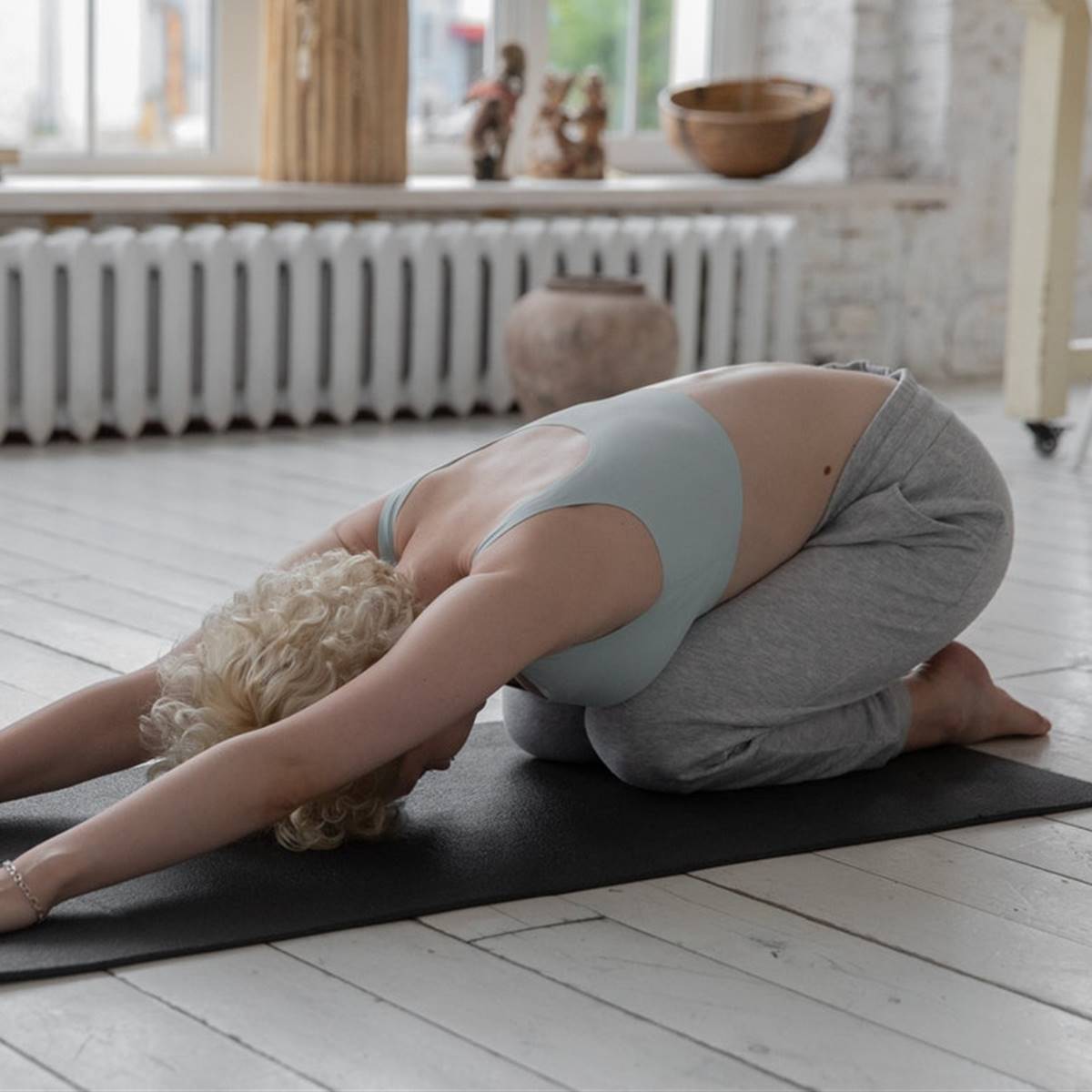
In this article we will show the relationship of the head with the body, and how the way we move and use it (and tension) influences it in turn. Being more aware of that link can avoid the dreaded headache, facilitating well-being… and good thinking.

There are two parts that directly influence the head by proximity: the neck and the jaw. We explain how to take care of both areas to avoid headaches and we propose exercises to relax the muscle tension of these areas to avoid headaches and associated discomfort.
JAW STRAINS THAT CAUSE HEADACHE
The jaw is, next to the neck, a pillar of the head. To feel its importance, we can act as if we chew while placing the palms of the hands on the joints of the jaw and temples. At each bite we perceive the tension in the head.
Headache can have very diverse and complex causes, but it is often due to tensions in a number of muscles, such as:
- The sternocleidomastoid, which runs from the collarbone to behind the ear, is often involved in headache that occurs behind the ear and above the temple.
- The splenium, which comes from the back and is crimped just behind the ear, can produce pain that is noticeable in the scalp, in front of the fontanelle.
- Those that join the jaw with the temple can generate pain in the temple, in the eyelids and on them.
- The trapezoids, which go up the back, project reflex pain on the nape of the neck, shoulder, neck and temples.
MASSAGE TO RELAX FACE AND HEAD
Massaging these muscles gently and circularly makes us more aware of tensions, helps to relax them and relieves pain in the various areas of the head affected. Remember that a self-massage has no side effects!
- From the cheeks to the center of the base of the skull we give a circular massage with the thumbs.
- We gently pinch the eyebrows from the inside to the outside.
- Rub the first two phalanges of the thumbs, one against the other. When we feel warm, we caress the eyebrows from the inside out. We continue with these horizontal lines from the forehead to the scalp.
- With the palms caress the face from the center outwards.
- We place the hands horizontally in front of the forehead and with the fingertips we move the scalp to the base of the skull. Repeat three times, drawing three lines parallel to the first.
- Stretch your ears up. Then the lobes down. Finally, we press with two fingers the cartilage around the edge of the ear.
EXERCISE SESSION TO RELAX THE HEAD
ENERGIZE THE HEAD
- Standing, facing the front, from the waist we turn the trunk and head to the right.
- From there we leave the thorax motionless and turn the head to the left, to, without moving it, turn the eyes to the right.
- We undo the movement in reverse order: the eyes return to the left, the head to the right and this and the trunk to the center. We repeat to the other side.
FREE SHOULDERS, NECK AND HEAD
- We form with our hands a triangle, which is based on the two thumbs joined by their tips.
- We separate the arms at the sides of the body, without lowering them, while with the hands we form a fist (without making force).
- At the same time, with our eyes and head we follow the right hand.
- Then we repeat to the left.
STRETCH YOUR NECK
- We drop our head to the left side.
- We hold on for 10 seconds and raise our right arm at an angle of about 30º. We raise the hand out of the body, at an angle of about 90º.
- We stay like this for 10 seconds and slowly raise the arm to chest height without turning the wrist, so that the fingers end up looking at the sky.
- We return to the starting position and repeat to the other side.
STRENGTHEN THE NAPE OF THE NECK AND NECK
- Standing, we cross the fingers of our hands and place them, intertwined, behind the head, with the elbows pointing forward. Try to bring your hands to your head and not the other way around!
- We try to push with our head back while our arms prevent it.
The exercise can also be done with the hands above the ears or intertwined on the forehead, but always opposing the thrust of the head.
OPEN BACK, NECK AND HEAD
- Standing, facing forward and with our hands forming a fist on the sides of the head and forearms at a 90-degree angle, we stretch our arms upwards.
- With the eyes and the head, we look at the right hand that, like the other, has the fingers extended.
- We return to the starting position to repeat the exercise looking at the left hand.
RELATE HEAD, PELVIS AND FEET
- Kneeling on the floor, we support the palms of the hands and forearms on both sides of the head, and use them to raise the knees slightly, leaning on them.
- From that position, we bring our knees and legs to the left side and close to the ground, but without touching it, and then bring them to the right. The toes do not move.
- The legs rotate right and left, almost like a pendulum. Back and head are kept aligned. Tilt about ten times on each side.
ALIGN HEAD AND PELVIS
- Similar to the previous exercise, we place the forearms on the floor; But this time we do it with our hands intertwined forming an equilateral triangle, with the weight distributed between arms and feet.
- From there we tilt the hips back and up, to stretch the entire back. We hold the position and bring the hip forward again. Repeat the exercise four times.
POSTURE ON THE HEAD
- From the previous position, we place the head between the hands and move forward with small steps to place the vertical trunk.
- When you can’t get any closer, lift your feet and try to stick your thighs to your abdomen with your legs shrunk.
- Once you sit balanced in this position, stretch your legs towards the sky. Take ten deep breaths.
ALIGN YOUR TRUNK WITH RESPECT TO THE HEAD
The neck supports the head and allows it to be turned in all directions. Along with the lumbar, the cervical vertebrae are the most mobile vertebrae, but that virtue is also their weakness.
Unlike the lumbar vertebrae, which have solid bases of support in the pelvis, thorax and abdominal muscles, the cervical vertebrae are attached to the muscles of the neck, which has very sensitive channels, such as the tongue that is set in its center (where the mouth, nose and ear communicate) or the large arteries that irrigate and nourish the head.
As a general rule, it is not advisable to tilt the head towards the nape of the neck compressing the neck to the extreme.
- If we want to look up, we will slightly tilt the trunk backwards, with the abdominals contracted towards the back. In this way, both the front and back are stretched forming an arc. To look at the sky or the clouds we will use the whole body and not only the cervical.
- If we spend a lot of time sitting and our neck hurts, the cause may be a misalignment of the trunk with respect to the head.
- An exercise to avoid this is to stretch on the floor face down, taking the left foot with the left hand, trying to get the groin to touch the ground and without making force with the back (only with the arm). Then you change your foot and hand; and finally, the exercise is performed with both feet.
- Next, we sit and relax the head and trunk by tilting them forward, as if rolling them down, and then return to the sitting position aligning vertically with the ischia.
- To dispel it, place the left hand on the forehead and the right hand taking the lower jaw. We slowly move the latter with the right hand: down, up, right and left or in a circle, while the forehead remains immobilized with the left hand.
IMPROVING THE HEAD FROM THE BODY
Brain activity, like life itself, is never still: it moves forward or backward. Therefore, either we use it or our abilities will be diminished.
The body is reflected in the brain and the more we use the first the better the connections between the circuits of the second.
But there are two impediments to this: sedentary lifestyle and excessive specialization, which blocks the ability to perform many movements to the detriment of one.
According to the capacities they stimulate, actions to combat physical and mental sedentary lifestyle allow you to win:
- Concentration and perception. How to sew, play a musical instrument, DIY, practice chikung or yoga, juggle, meditate… Or any daily action to which we add small changes: for example, brushing our teeth or operating the computer mouse with the left hand if we always did it with the right.
- Capacity for action and reaction. They work on strength, endurance and elasticity: running, jumping, cycling, rowing, skiing, skating, surfing, aerobics or ballet, lifting weights, stretching… All this cleans the organs and facilitates the blood supply of the head, eliminating its pain, muscle blockages in the back, shoulders and neck.
To unlock ourselves physically and mentally we possess conscious bodily techniques that go from thought to body and those that take the opposite path. Among the first, the Alexander technique or the cos-art method stand out; and among the latter, yoga, the Feldenkrais method and Body-Mind Centering.
If we want to improve the oldest network of circuits in the brain, it is best to return to the primary movements we know.
This is what the therapeutic technique Body-Mind Centering teaches, which recovers the movements from the exit of the mother’s womb to standing up, renews them and opens new connections in the brain.
AN EXERCISE FROM THOUGHT:
- Sitting in a chair with a straight back, we feel the center of the head, where the fontanel is, and the center of the neck, where the tongue is inserted.
- Between these two points we throw an imaginary line that, on the one hand, passes through the center of the pelvis and goes between the feet to the center of the Earth and, on the other, projects towards the sky.
- We get up from the chair and try to make the line move with us, perceiving the environment or performing everyday tasks.
AN EXERCISE FROM THE BODY:
- We lie on the ground, with our legs bent and the soles of our feet on the ground.
- We drop the legs, feet and hips to the right and pick them up, about ten times, feeling the movement of the back and observing at the end how the relationship of the back with the ground has changed (does it support better?).
- Then we make the same movement by adding the head, which we try to roll like a ball to the right, next to the hips, legs and feet.
- When we have repeated it ten times, we feel the points of contact of the back with the ground and the differences between one side of the body and the other.
- Then, we repeat everything to the left.