
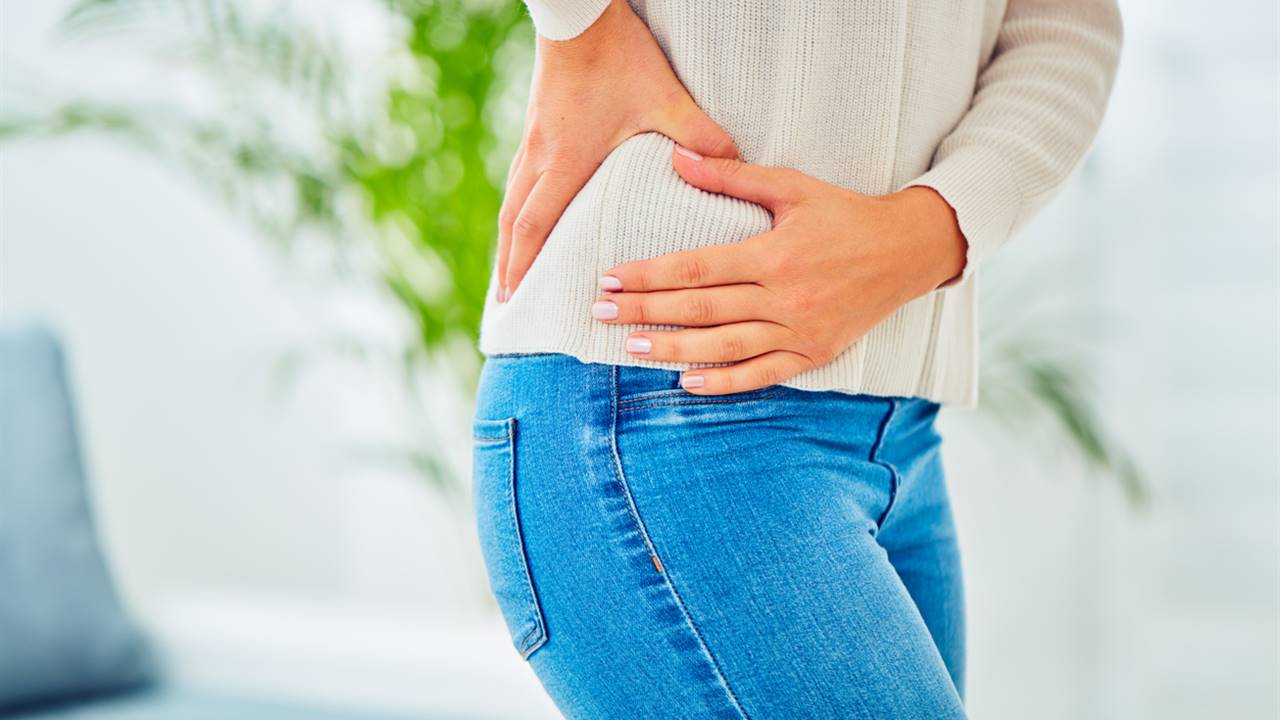
In people who spend almost all day sitting, mobilizing the pelvis and releasing tension from their joints is essential to protect the hip.
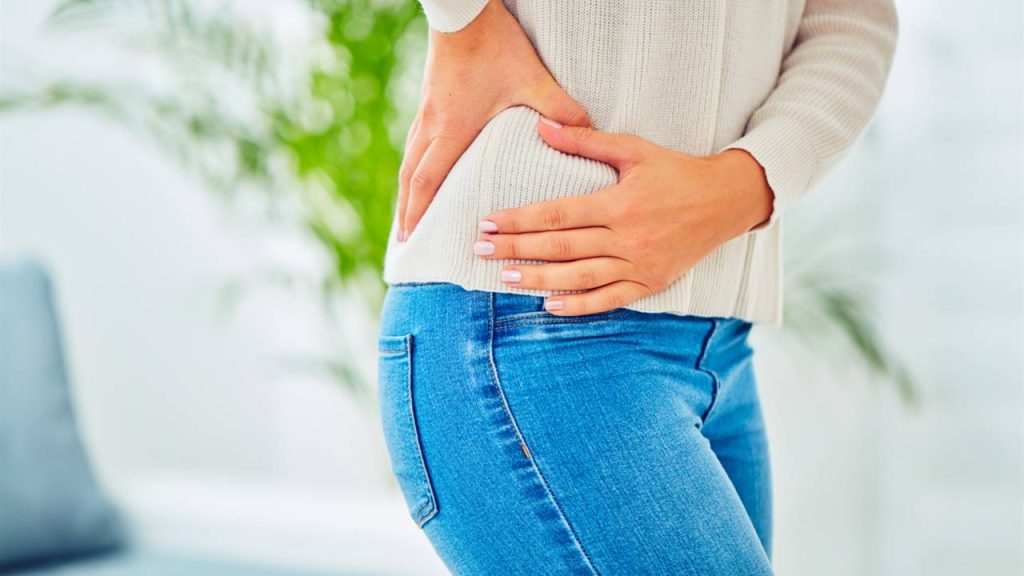
The ease with which we move the hip and pelvis, the base of our spine, will depend on our position and our movement in life. If your muscles are stiff and shrunken, so will your posture. That is why it is common to suffer from hip pain and, related to this, back pain. And how to remove hip pain? Some exercises to relax the hip may help.
WHY EXERCISE HELPS REDUCE HIP PAIN
When we observe the hip movements we perceive the strength, grace, balance, harmony of the person’s movement or their weakness and clumsiness. In judo, hip movement (O_goshi) was one of the favorites of its founder, Jikoro Kano, and one of those still taught in early classes. It is an essential movement in a sport based on flexibility. At the same time, it is one of the strongest in its execution.
When we observe belly dancing or, simply, harmonious walking, we see how the smooth, agile and graceful movement of the hip transmits strength, security and physical power at the same time.
Those of us who work sitting usually suffer from lack of mobility in the hip. Therefore, it is good that from time to time we become aware of its movements and feel its position in relation to the spine.
Let’s learn from this part of our body represented by the biggest and strongest bones we have.
Let’s see how the largest and strongest muscles of our body are inserted into it: the abductors of the leg, the buttocks, the anterior quadratus, the sartorius, the hamstrings, the iliac psoas, the muscles of the abdomen (anterior recti, oblique and transverse), the special ones of the pubis, such as the superficial transverses, the sphincters of the anus and bladder, the puborectal bundles…
Among the functions of the hip is to support our whole body and mobilize it, to walk and run, and also to dribble and avoid dangers.
At the same time, it is a place for flexibility and a place of passage (through it pass feces, urine, pleasure and babies who are about to be born).
These functions of the pelvis make its movements represent strength, support and flexibility, and make it a center of sensory and motor coordination.
To become aware of the pelvis:
- For a few minutes a day, try to make slow movements with her sitting in a chair. looking for all its possibilities and the points of maximum flexibility.
- Observe when walking if we feel the hip loose or contracted. In case of stiffness, relax it and check that the gait is thus more agile.
EXERCISES TO STRENGTHEN THE HIP
Bipedalism is a rare form of locomotion even in primates. The feat of balance and coordination involved in walking on two feet is possible largely thanks to the flattened structure of the pelvis.
Similar to a saddle, the pelvis distributes the weight of the trunk to the legs and allows the insertion of large muscles: the upper and posterior leg, those of the abdomen and those of the buttock, which contract at each step to prevent us from falling to one side by having all the weight supported on one foot.
The human body has been designed to perform circular movements, without following a perfectly linear trajectory. Gymnastics that integrates simple joint rotations stimulates and relaxes muscles more naturally and spontaneously.
Drawing imaginary circles with the hips, wrists or ankles produces small twists and muscle stretches that activate circulation. One way to put these ideas into practice and that they are not mere theory is to exercise with a large ball.
The so-called Swiss ball also allows you to play with balance, tone muscles that are little used with a sedentary lifestyle and gain flexibility.
In addition, the rotations with hip swinging on Swiss ball, performed with little resistance (hands and feet supported), provide a massage that can relieve the pressure of the lumbar.
They also help strengthen the core and back muscles, benefit connective tissue and significantly reduce postural fatigue.
When sitting on the ball:
- Place your feet flat on the floor, your thighs parallel and your hips and knees at a 90-degree angle.
- The hands should be resting on the thighs or sides of the ball and the back should remain upright and relaxed, right in the center of the ball to avoid imbalances.
EXERCISE TO GAIN HIP FLEXIBILITY
To improve hip flexibility, do this exercise:
- Sit on the ball with your hands on your legs and ensure your balance.
- Then move your arms back and support them on the ball.
- Start gently rotating your hips to the right by drawing an imaginary circle in slow motion.
- Shift your weight onto your right ischium, the bone under your buttock.
- Then move the pelvis back and complete the circle by shifting the weight onto the other ischium.
- Complete the rotation by moving your pelvis forward.
- Repeat the exercise five times.
To relax the hip and lumbar area it is also important to relax the adductors. This other back stretch is a great complement to this exercise.
HIP YOGA EXERCISE: “CRADLING THE BABY”
To stretch your hips and upper thigh muscles, sit cross-legged, lift one leg to your chest, and support the outside of your ankle with one arm, while the other circles your bent knee.
Then, with your back straight, push your leg towards your chest gently until you feel how the back of your thigh stretches.
Swing gently as if cradling a baby, for 10 to 15 seconds, and change legs.
EXERCISE TO RELAX AND STRETCH THE PSOAS
Also, in the pelvic region extends, from the last dorsal vertebra and the five lumbar to the thigh, a small deep muscle, the psoas, which constitutes the main connection between the upper and lower body, and controls stability in movements.
An exercise indicated to relax and stretch it consists of lying on the back, with the legs stretched in line with the hip and femur joint.
The right leg is lifted and the thigh is brought to the chest to gently embrace the knee, bringing it closer to the trunk. The pelvis has to align with the trunk. Then the left leg is opened by slowly sliding it out.
You have to feel how the left psoas is stretched: first concentrating on the upper area of the hip joint and, little by little, moving mentally through the muscle. It is repeated with the other leg.