
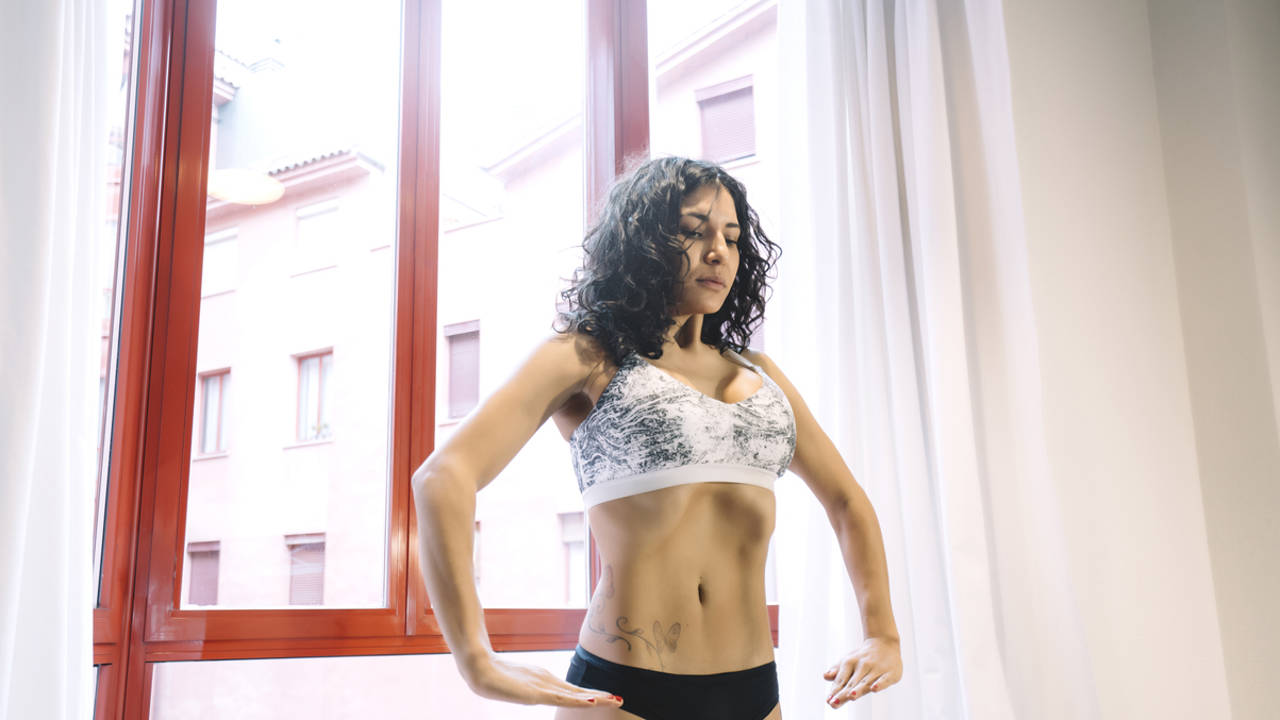
Hypopressive gymnastics strengthens the abdominal and pelvic floor muscles, correcting bad postures and back pain.
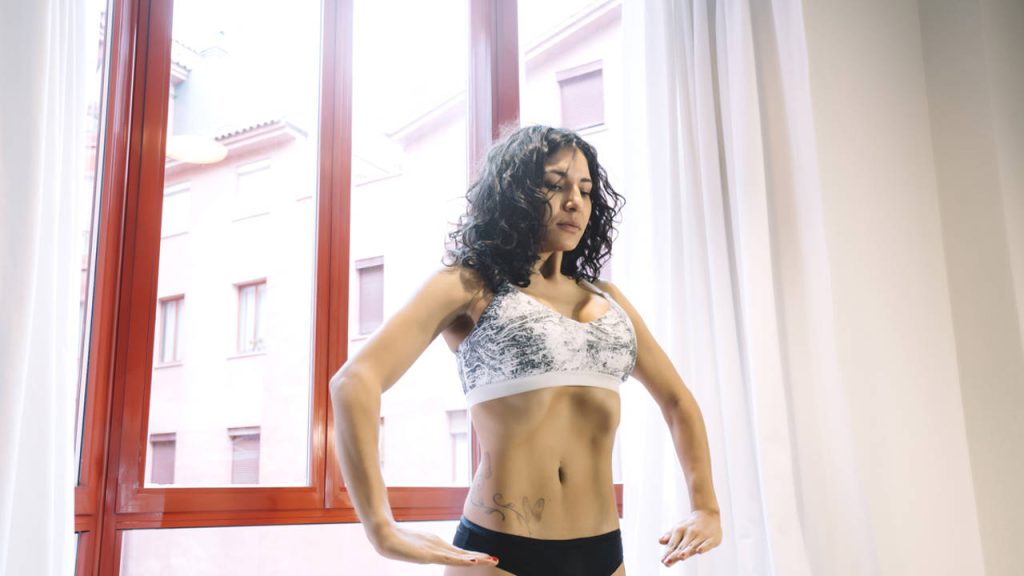
Although it is still not as popular as the Pilates method, hypopressive abdominal gymnastics has more and more followers and has already revolutionized the world of physiotherapy for its enormous effectiveness in toning the deep abdominal muscles and the pelvic floor muscles.
It is the result of the research of the Belgian physiotherapist Marcel Caufriez at the end of the 80s, when this expert was looking for a method that would reduce intra-abdominal pressure and allow recovery from the damage caused by pregnancies and childbirth, avoiding the numerous cases of urinary incontinence derived from them.
HYPOPRESSIVE ABDOMINALS: WHY THEY WORK
Hypopressive gymnastics combats abdominal flaccidity and the increase in volume or “tummy” that results from it.
It happens because all the exercises that compose it directly affect the abdominal manometric strap, which goes from the waist and surrounds the entire abdomen below the navel.
Like the pelvic floor muscles, the abdominal manometric girdle, in both men and women, weakens over time. Its hypotonia manifests itself with a feeling of pressure in the lower abdomen and the appearance of an increase in volume in this area.
Specifically, after pregnancy the muscles of the abdominal manometric girdle are always open and separated. Hence, after childbirth many women complain that, even without having gained weight, they have been left without waist and with more “belly” in the lower abdomen, volume that they try to reduce through traditional abdominals.
However, only hypopressive gymnastics allows to narrow the abdominal manometric girdle again and tone it without the danger of damaging the cervical and lumbar and without increasing the pressure on the pelvic floor, as with the realization of traditional abdominals.
After six months of 15 minutes of daily practice it is feasible to reduce up to two holes in the belt.
HYPOPRESSIVE ABDOMINALS: THE EASIEST AND MOST EFFECTIVE EXERCISE
To reduce the belly, you can practice this highly effective hypopressive abdominal:
- Standing, with parallel feet and bent knees, separate the shoulder blades and empty all air through the mouth.
- While you hold your breath (apnea) and sink your abdomen, gradually raise your arms while maintaining maximum separation of the shoulder blades.
Here we explain how to do apnea well and contract the muscles while doing this exercise.
HYPOPRESSIVE ABDOMINALS: HOW TO DO APNEA WELL
The key to the effectiveness of hypopressive gymnastics is that it is performed in apnea, that is, without air in the lungs or abdomen.
Hypopressive gymnastics is performed with empty lungs. This, which involves a remarkable physical effort, not only allows to reduce the intra-abdominal pressure and the pelvic floor, but also to open the ribs well and mobilize the entire diaphragm.
Another of its benefits is the increase in the flexibility of the breathing muscle and lung capacity, something very useful in those who usually breathe superficially.
To encourage this expansion, before starting it is good to unhook the ribs laterally by opening them with your hands (put your fingers under them at the bottom) and perform the first exercises by placing one hand on each side of the rib cage. This way we make sure that it opens well in the exercises.
In all exercises, all the air is first emptied through the mouth, the glottis is blocked and the abdomen is sunk as much as possible, while the ribs are opened to the maximum separating the scapulae.
HYPOPRESSIVE ABDOMINALS: HOW TO CONTRACT THE MUSCLES
The pelvic floor is a system of muscles and alignments that close the floor of the abdomen keeping in correct position and in suspension the bladder, uterus or prostate and rectum against the force of gravity.
Its weakening produces stress urinary incontinence, prolapses (fall and displacement of the intra-abdominal organs) and sexual dysfunctions. Incontinence after childbirth affects about 30% of women and hemorrhoids affects 50% of pregnant women.
Imagine that the abdomen is a balloon and the pelvic floor the lower and weaker part of that balloon. Consequently, any increase in air pressure affects this part of the balloon. It’s the same thing that happens to the pelvic floor.
Any activity we do during the day, from getting out of bed, walking, coughing, any physical exercise (cycling, running, swimming …) It produces an increase in abdominal pressure and pressure on the pelvic floor muscles by pushing it down.
Sports that involve jumping, the hormonal changes of menopause, genetic weakness in the pelvic floor muscles that register two out of ten women, obesity, constipation, chronic cough and stress are other causes of weakening of this musculature.
Marcel Caufriez designed the hypopressive abdominal gymnastics exercises with the aim not only of counteracting this continuous pressure on the pelvic floor, but of raising it as much as possible.
His method, by emptying the lungs and freeing the abdomen from the pressure exerted by the descent of the diaphragm and part of the thoracic area, manages to raise all the muscles of the pelvic floor and the viscera that it supports.
The results can be spectacular: the organs can rise up to two centimeters, avoiding operations for prolapse of one, two and three degrees.
15-MINUTE DAILY ROUTINE OF HYPOPRESSIVE EXERCISES
Nowadays these gymnastics, which requires practically no movement, is also being applied successfully in back pain caused by postural problems, since it allows to work the back in a global way even when there is pain. Many daily activities, such as carrying weights, have a negative impact on the lumbar body, especially if there is hypotonia in the abdominal area.
Hypopressive gymnastics exercises tone the superficial and deep muscles surrounding the spine and improve posture. In addition, when carried out blocking the movement of the lumbar spine can be recommended even when there is pain.
Hypopressive gymnastics can be recommended at any age. It is only contraindicated in case of hypertension, severe respiratory disorders, traumatic pathologies (knee or hip prosthesis) and dysfunctions of the diaphragm.
Each exercise proposes a global work, coordinating the muscles that are functionally grouped into muscle chains.
The following test can be carried out to check the close relationship between certain muscles.
Standing, with your feet together, lower the entire trunk to touch the tips of your feet with your hands, always keeping your knees straight. See how far you go.
Now return to the starting position and open your mouth as wide as you can, keeping it wide open for at least 15 seconds, thus tightening the sternocleidomastoid to the maximum and moving the lower jaw forward.
Again, lower the trunk and place your hands on the floor as far as possible keeping your knees straight. Surely this time you have been able to get a little lower.
And it is that the chewing muscles stretch the hamstring muscles or posterior musculature of the thighs.
In the same way, the separation of the shoulder blades increases the toning of the abdominals. That is why it is so important to maintain the separation of the scapulae: in this way the muscles of the manometric webbing can be brought together much more.
There are between 10 and 12 basic exercises and more than a hundred variants. It is recommended to learn them in a specialized center to master the technique well with six classes of about 45 minutes.
Once the learning is done, the exercises are very easy to practice at home or anywhere else. You can choose the most comfortable, since they all allow to obtain similar benefits.
There are exercises to perform sitting, standing or crawling on the floor, but some can be done even stretched out in bed. Just 15 minutes a day of practice is enough to get all the benefits of this new global gymnastics.
Here are some of the hypopressive gymnastics exercises you can practice at home. You can choose the one that is most comfortable, because all allow you to obtain similar benefits at the level of postural improvement and abdominal and pelvic floor toning.
But each of them affects a little more on a certain area of the body. In addition to doing the hypopressive abdominal exercise that we have advanced, complete your hypopressive routine with these exercises:
TO STRENGTHEN THE PELVIC FLOOR
Seated, supporting in the chair simply the ischia (the bones of the pelvis), the legs are kept with a flexion of 90 degrees and the feet in “flex”, that is, with the ankles stretched and the tips of the feet facing the ceiling.
Then the shoulder blades are separated by placing the hands in front of the chest, all the air from the lungs is emptied, the abdomen sinks and the position is maintained until you have the need to take air.
TO IMPROVE LEG TONE
Standing, the knees are bent about 60 degrees, as if we wanted to sit in an imaginary chair.
The entire weight of the body is pulled forward and the hands are placed almost on the thighs but without supporting them.
By bringing the weight of the body towards the tips of the feet, the lumbar and the entire spine are placed in line with the head.
Then, the shoulder blades are separated and apnea is performed. You hold your breath by keeping your abdomen inward as much as possible. You breathe and repeat the exercise.
TO WORK THE ARMS
Stretched on the floor face up on a soft surface, slightly flex the left leg resting the ankle on the floor and the fingers pointing to the ceiling.
The right leg is raised to maintain a hip flexion of 90 degrees and a knee flexion also of 90 degrees, with the foot well stretched.
The right arm now approaches the bent knee and the left arm is raised 180 degrees by flexing the palm upwards.
In this position, the scapulae are well separated, all the air from the lungs is emptied, the glottis is blocked and breathing is held by sinking the abdomen to the maximum and opening the ribs well. It is repeated on the other side.
TO TAKE CARE OF THE BACK POSTURE
Standing, with feet parallel and knees slightly bent, hands are placed on hips.
The weight of the body is brought on the tips of the feet, the shoulder blades are separated and all the air is emptied.
The ribs open laterally and the abdomen sinks.