
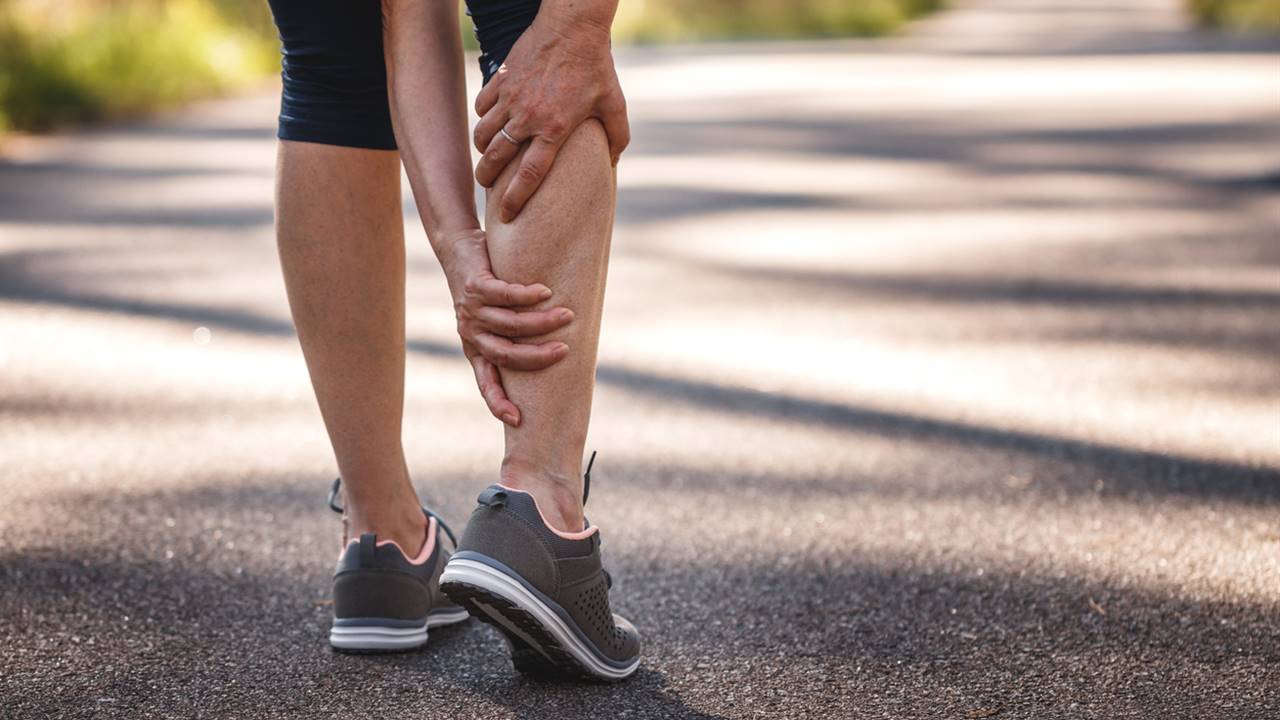
Exercise and sport often have painful side effects, especially if you’re not trained. But there are natural products that help you prevent and treat soreness.

It is common to feel muscle pain after exercising, which is popularly known as “stiffness”. When this occurs, the limbs are literally stiff and their range of motion is reduced. The affected muscles are hard, tender to pressure and weak. With soreness, the maximum strength of a muscle can be reduced by up to 30 percent.
Everyone knows that pain that can paralyze you for several days. These symptoms are a sign that your muscles are exerting themselves and have not yet recovered. However, that pain can paralyze you for several days and, therefore, we all wonder how to remove the laces in 5 minutes to be able to continue with our lives. Although it may require a little more time, you will be happy to know that there are natural remedies that help you remove soreness quickly and effectively.
WHAT ARE LACES?
For a long time, it was assumed that pain after exercise was related to a hyper acidification of the muscles. But this theory is now outdated. It is now known that the cause is small breaks in the muscle fibers.
However, some experts believe that soreness responds to the sum of several factors, one of them being the accumulation of metabolic products in muscle tissue in combination with fiber breaks.
On the other hand, the popular belief that the laces will be removed by exercising more is not correct. This is a mistake. There is no solution to achieve instant relief and remove soreness in 5 minutes, although we do have natural options to eliminate those metabolic products quickly from muscle tissue.
HOW TO REMOVE LACES WITH NATURAL REMEDIES
There are many natural remedies to relieve the pain of soreness:
HOW TO REMOVE LACES WITH HEAT
There is only one thing that really helps against stiffness and that is the heat of a hot bath or shower or a visit to the sauna. This not only relieves pain, but also speeds up the healing process.
So, after the tennis match, hiking or cycling, take a long, hot shower. Proponents of natural medicine, on the other hand, know a whole range of remedies that can be used in addition to heat.
HOW TO REMOVE SORENESS WITH KNEIPP THERAPY: QUICK REMEDY
Many naturopaths recommend Kneipp therapy after exercise (alternating showers with warm water for 3 minutes and cold water for 20 seconds) or saunas.
Light massages may also be helpful, but caution is advised. Too strong massages represent additional mechanical irritation of already damaged muscles and thus delay the healing process.
HOW TO REMOVE LACES WITH RELAXING BATHS
Relaxing baths with rosemary or fir needles as home remedies are also a good idea. Heat and medicinal plants stimulate blood circulation. This also applies to light movement, which promotes the healing process. However, in case of doubt, it should be clarified if there is a major muscle injury, because then they should rest for longer.
HOW TO REMOVE LACES WITH HOME REMEDIES
Other remedies to combat annoying soreness include:
- Apply an herbal ointment or cream, such as arnica, comfrey, or motherwort to the affected area
- Wraps with arnica. Pour 1 teaspoon of flowers into 250 ml of liter of boiling water and let stand ten minutes; or dilute 1 teaspoon of tincture in 250/<> ml of water. Be careful with external injuries, never apply arnica on open wounds.
- Hay flower wrap or a hay flower bath.
- Place cold compresses on the affected area
- Take a magnesium supplement, which relieves tension and has a relaxing effect.
HOW TO PREVENT SORENESS
There are some natural products and home remedies, but of course it is better if the laces do not even appear.
In order to prevent them, it is good to know something about their development. Symptoms usually appear after physical activities to which we are not accustomed or that are particularly stressful.
That is why in principle the following rule applies: do not overdo the exercise, you have to increase time and intensity little by little.
- Before starting exercise, you can also rub your muscles with oils that promote blood circulation, particularly oils that include St. John’s wort, arnica, juniper and rosemary.
- After training, you should slowly reduce activity and tension in the muscles with the help of stretching exercises. This is evident for running, but similar measures can also be applied in other sports.
HOW TO PREVENT SORENESS WITH LEMONGRASS
Lemongrass (Aloysia citriodora), a medicinal plant commonly taken in infusion, may help prevent them. This has been confirmed by a small recent study carried out in Germany to verify its effects on pain and muscle function after exercise.
If you exercise, whether intense or moderate, you are likely to suffer from soreness. After exercise our muscles suffer small damage, increased oxidative stress and inflammation, which makes our muscles feel tired and sore in the following days.
The study, published in the Journal of the International Society of Sports Nutrition, found that herbal reduces soreness and accelerates muscle recovery compared to a placebo. The effect could be due to its antioxidant and anti-inflammatory action.
To prove this, the study used a patented extract of organic herb, also known as cedron or Indian verbena, and forty people, men and women, between 22 and 50 years old were chosen. All of them were moderately active and consumed a similar number of fruits and vegetables per day.
MORE EFFECTIVE THAN PLACEBO
Half of the participants were given two 200 mg capsules of herbal extract, and the other half, maltodextrin as placebo, every morning for 15 days.
On the tenth day they were subjected to a scheduled session of intense exercise based on jumps, very demanding with the lower extremities. Just before the exercise and during the following four days, several parameters related to pain and muscle function were measured.
On the one hand, both groups were asked to assess the pain they felt when moving, specifically when sitting and getting up from a chair. On the other hand, they had to quantify the pain they had felt throughout each day in their normal activities, on a scale of 0 (“no pain”) to 6 (“severe pain that limits my movements”).
In addition, muscle strength and several biochemical markers related to muscle damage and antioxidant activity were measured, such as creatine kinase, glutathione peroxidase and interleukin-6.
While the perception of pain felt throughout the day was similar in both groups, overall, the pain perceived with movement at the time was lower in people who took herb.
In addition, the group of people supplemented with lemongrass not only had less muscle damage than the placebo group, but also took less time to fully recover.
BETTER RECOVERY AND MORE ENERGY
Those who took lemongrass also lost less muscle strength as a result of exertion: 11% versus 21%. Within 48 hours, participants returned to the same muscle strength as before exercise, but not in the placebo group.
Muscle strength is considered an indicator of the condition of the muscles, which reinforces the idea that the herb would contribute to cushion the muscle damage caused by exercise.
According to the researchers, by reducing muscle damage, the herb could not only “accelerate recovery but directly reduce tiredness after exercise.”
Among the biochemical markers analyzed, only significant results were obtained in glutathione peroxidase levels, higher in people who took lemongrass than in those who took placebo.
This elevation, which occurred only after you had performed the exercise and not before, indicates that the herb would help increase the antioxidant activity that the body would set in motion to counteract oxidative stress.
POLYPHENOLS COULD BE THE KEY AGAINST STIFFNESS
According to the researchers, these results coincide with those of other studies on the effect of other substances on the appearance of soreness, such as ashwagandha, curcumin, pomegranate or blueberry.
What these ingredients have in common is their richness in polyphenols, as with lemon verbena. These substances are antioxidants: they reduce oxidative stress and inflammation processes.
“It has been suggested that polyphenols might be useful in preventing muscle damage and speeding recovery,” the study authors note. This could be due to its antioxidant activity, although more studies would be needed to confirm it.
WHEN TO WORRY ABOUT STIFFNESS
Muscle soreness usually occurs after exercise and usually goes away after a few days. In the case of unusual, extreme or prolonged pain, a visit to the doctor is essential. This is the only way to know if there has been a larger muscle fiber tear or if some other injury has occurred.